
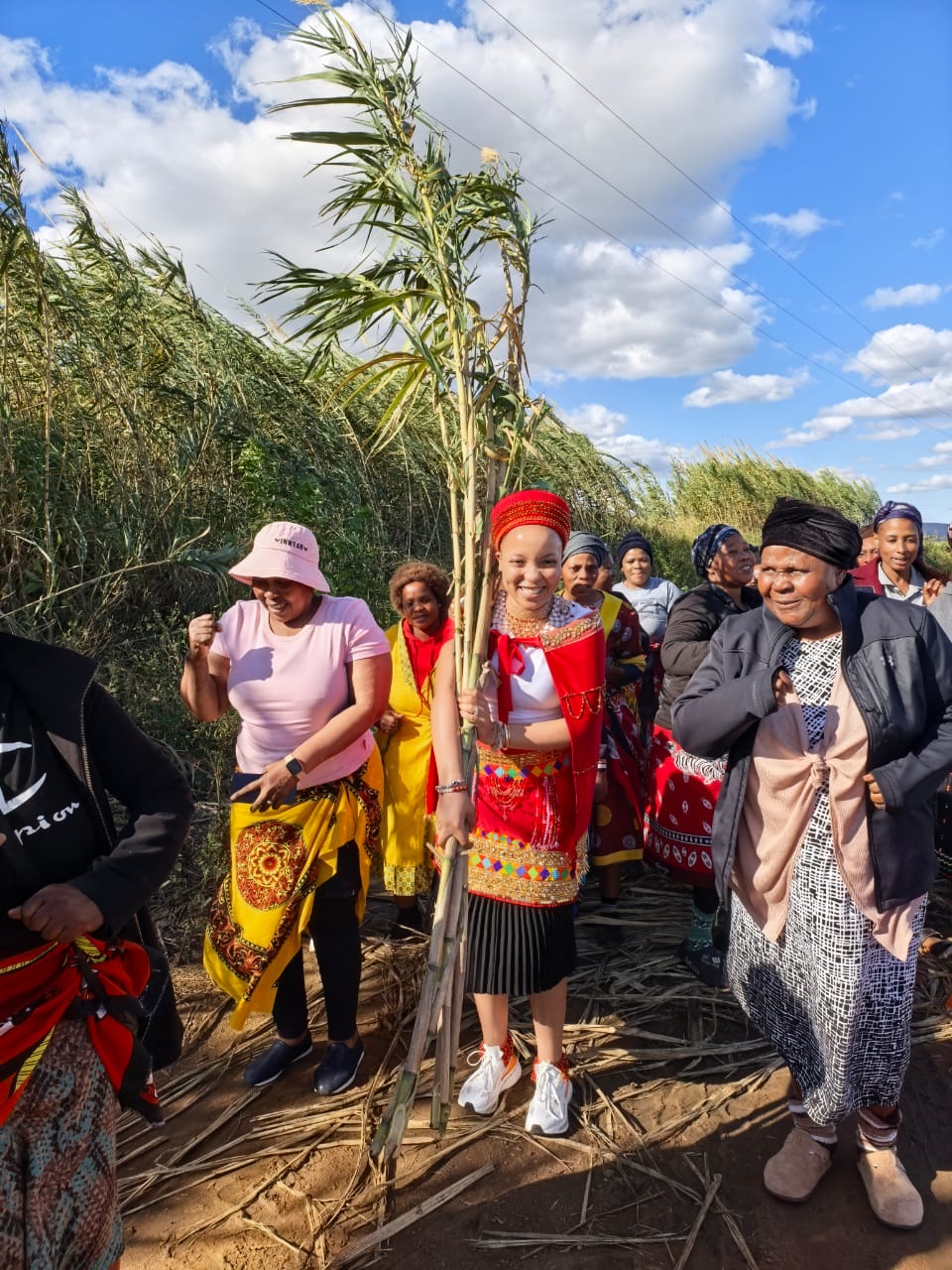
As South Africa marks the beginning of Women’s Month, it is fitting that the month opens with Umkhosi Wesivivane—a ceremony that celebrates womanhood, promotes Ubuntu, and preserves Zulu cultural heritage.
One of the most significant moments of the ceremony is the presentation of reeds (izithungo). While they may appear to be simple plants gathered from wetlands, the reeds carry profound cultural meaning.
According to Zulu oral tradition, the Zulu nation originated from uhlanga (reed). Hense the phrase ” Nina boHlanga” This ancient belief makes the reed a symbol of life, ancestry, identity, and the continuity of a people.
When hundreds of women gather at Umkhosi Wesivivane carrying reeds, they are participating in more than a cultural tradition. The reeds become a powerful expression of unity. A single reed bends easily, but many reeds together represent the strength found in standing as one community. They also symbolise the dignity of women, respect for cultural heritage, and the responsibility of each generation to preserve the values passed down by those who came before.
The reed’s symbolism extends beyond Umkhosi Wesivivane. It is also central to Umkhosi Womhlanga, where it represents cultural pride and the important role of women in society. Although each ceremony has its own purpose, both remind us that the reed is far more than a plant—it is a living symbol of identity, belonging, and resilience.
As Women’s Month begins, the message of the reed feels especially relevant. It reminds us that true strength lies not only in standing tall, but in standing together. Just as the reeds are gathered and presented together, women continue to shape families, communities, and the nation through their unity, leadership, and resilience.
There could be no more fitting way to begin Women’s Month than with a ceremony where women carry not only reeds, but the story, strength, and heritage of a people.
Discover more from Beads Magazine
Subscribe to get the latest posts sent to your email.